

about this
project
Although this program is rooted in the experiences of primarily Jewish artists working under the rise of the Third Reich during the first half of the twentieth century, its themes continue to resonate for all artists today. Throughout history, artists have often been among the first to challenge injustice, question those in power, and give voice to communities facing oppression. When creative expression is silenced through censorship, political persecution, or intimidation, societies lose not only important works of art but also opportunities for dialogue, empathy, and dissent. Rather than drawing direct comparisons to contemporary events, this project invites audiences to consider the enduring value of artistic freedom and to reflect on the role that music, theater, artsand poetry can play in preserving democratic ideals, confronting intolerance, and encouraging thoughtful civic engagement.
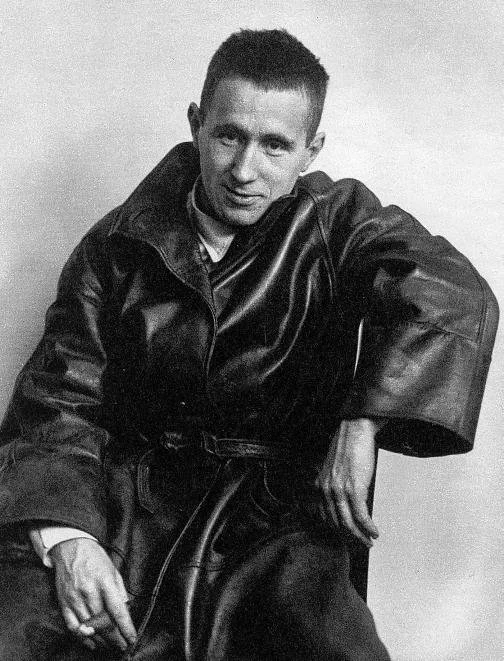
“Art is not a mirror held up to reality, but a hammer with which to shape it.”
FEATURED ARTISTS
Bertolt Brecht (1898-1956)
Bertolt Brecht was a German poet, playwright, and lyricist whose groundbreaking theatrical works challenged audiences to think critically about politics, power, and social justice. A committed anti-fascist, Brecht fled Germany after Adolf Hitler came to power in 1933, spending years in exile before eventually settling in East Berlin. His collaborations with composer Kurt Weill, including The Threepenny Opera, remain among the most influential works of twentieth-century musical theater.
Hanns Eisler (1898-1962)
Hanns Eisler was an Austrian composer and one of the twentieth century's most politically engaged musicians. A student of Arnold Schönberg, he devoted much of his career to writing music that was accessible, socially conscious, and deeply connected to working-class movements. After fleeing Nazi Germany, Eisler settled in the United States, where he composed for Hollywood films before being called before the House Un-American Activities Committee and deported during the Red Scare. His Hollywood Songbook, written during his years of exile, is considered one of the most poignant vocal works of the era.
Kurt Weill (1900-1950)
German-born composer Kurt Weill blended classical music, jazz, cabaret, and popular song to create a distinctive musical voice. Best known for his collaborations with Bertolt Brecht, including The Threepenny Opera and Rise and Fall of the City of Mahagonny, Weill's music often explored themes of inequality, corruption, and the human condition. As a Jewish composer, he fled Nazi Germany in 1933 and later built a successful career on Broadway, composing celebrated works such as Lady in the Dark, One Touch of Venus, and Street Scene.
Marc Blitzstein (1905-1964)
Marc Blitzstein was an American composer, lyricist, and librettist whose work fused classical composition with political activism and social commentary. Deeply influenced by both European modernism and American musical theater, he is best known for The Cradle Will Rock, a groundbreaking musical that confronted issues of labor rights, corporate power, and economic inequality. Produced under extraordinary circumstances after government pressure attempted to halt its premiere, the work became an enduring symbol of artistic freedom and political resistance.